Emergency medicine subspecialties & fellowships explained
By Stephen Leggitt June 6, 2026
 Share
Share- Export to PDF
 Listen
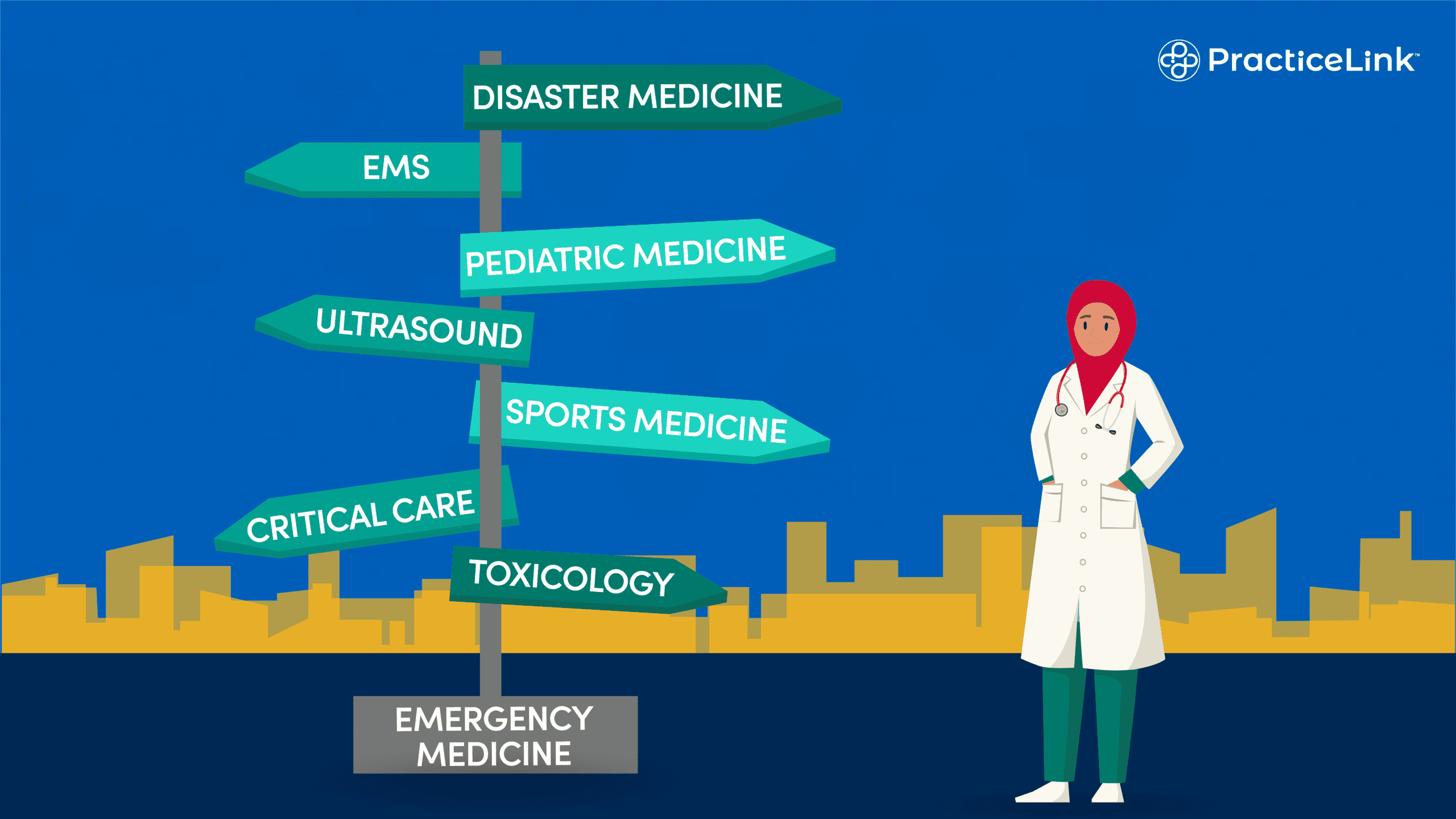
Emergency medicine subspecialties & fellowships explained
Emergency medicine offers physicians a unique combination of variety, flexibility and fast-paced clinical care. While many physicians build long-term careers in general emergency medicine, others choose to pursue emergency medicine subspecialties through fellowship training. These advanced pathways allow physicians to focus on specific patient populations, procedures, leadership roles or healthcare systems while expanding long-term career opportunities.
For physicians exploring the next step after emergency medicine residency, fellowship training can provide greater career flexibility, academic opportunities and improved work-life balance. Whether your interests involve pediatric care, critical care, toxicology, EMS leadership or sports medicine, emergency medicine fellowships create opportunities to shape a career that aligns with your professional goals and personal priorities.
What are emergency medicine subspecialties?
Emergency medicine subspecialties are advanced areas of focused training completed after residency through an emergency medicine fellowship. Most fellowships last one or two years and provide specialized experience in clinical care, education, research, administration or public health.
Many physicians pursue emergency medicine fellowships to expand career flexibility, pursue leadership opportunities or reduce long-term burnout risk. Fellowship training can also help physicians diversify their work beyond traditional emergency department shift schedules.
What is an emergency medicine fellowship?
An emergency medicine fellowship is additional postgraduate training that allows physicians to gain expertise in a specific area of emergency medicine. Popular emergency medicine specialty options include pediatric emergency medicine fellowship, emergency ultrasound fellowship, toxicology fellowship, EMS fellowship, sports medicine fellowship and critical care emergency medicine.
Some fellowships also provide pathways toward additional emergency medicine board certification or subspecialty credentials.
How long are emergency medicine fellowships?
Most emergency medicine fellowships require one to two years of training after residency. Ultrasound, EMS and sports medicine fellowships are commonly one year long, while toxicology, pediatric emergency medicine and critical care fellowships often require two years or more.
Is fellowship training required in emergency medicine?
No. Most emergency physicians practice successfully without fellowship training. However, subspecialty training may create opportunities in academic medicine, hospital leadership, research, public health and specialized clinical practice.
For physicians interested in long-term career advancement, fellowship training can provide valuable professional flexibility.
Pediatric emergency medicine
Pediatric emergency medicine fellowship focuses on the care of infants, children and adolescents with acute illnesses and injuries. This is one of the most established emergency medicine subspecialties and remains highly popular among physicians who enjoy pediatric care.
What does a pediatric emergency physician do?
A pediatric emergency physician evaluates and treats conditions such as respiratory distress, trauma, infections, fractures, neurologic emergencies and congenital disorders in children. These physicians often work in children’s hospitals, pediatric trauma centers and academic medical centers.
Many physicians in pediatric emergency medicine also participate in resident education and research.
How competitive is pediatric emergency medicine fellowship?
Pediatric emergency medicine fellowship programs can be competitive, especially at major academic institutions. Strong mentorship, pediatric experience, leadership involvement and research activity may strengthen fellowship applications.
What is the salary for pediatric emergency physicians?
Compensation varies based on practice setting, region and academic involvement. While some pediatric emergency physicians may earn less than community emergency physicians, many value the specialized patient population and academic opportunities available in pediatric emergency medicine.
Emergency ultrasound fellowship
Emergency ultrasound fellowship focuses on point-of-care ultrasound (POCUS), which has become an essential diagnostic and procedural tool in modern emergency medicine.
What is point-of-care ultrasound?
Point-of-care ultrasound allows emergency physicians to perform bedside imaging during patient evaluation and treatment. POCUS is commonly used for trauma assessment, cardiac evaluation, vascular access, pulmonary imaging and procedural guidance.
Because ultrasound improves diagnostic speed and procedural accuracy, fellowship-trained physicians often become leaders in emergency department education and quality improvement.
What careers are available after ultrasound fellowship?
Physicians who complete emergency ultrasound fellowship often pursue careers in academic emergency medicine, residency education, ultrasound program leadership and hospital administration. Many continue working clinically while teaching residents and medical students.
Is ultrasound fellowship worth it?
For physicians interested in procedures, education and leadership, ultrasound fellowship can provide meaningful career advancement opportunities. Some physicians also appreciate the ability to diversify responsibilities beyond clinical shift work as an emergency medicine physician.
Toxicology fellowship
Toxicology fellowship trains physicians to diagnose and manage poisonings, overdoses, toxic exposures and substance-related emergencies.
What does a medical toxicologist do?
Medical toxicologists evaluate patients with drug overdoses, withdrawal syndromes, occupational exposures and environmental poisonings. They frequently consult for hospitals, poison control centers and public health agencies.
Where do toxicologists work?
Toxicologists may work in emergency departments, academic medical centers, poison control centers, public health systems and research organizations. Many physicians combine toxicology consultation work with ongoing emergency medicine practice.
EMS and disaster medicine fellowships
EMS fellowship and disaster medicine fellowship programs prepare physicians for leadership roles in prehospital medicine, emergency preparedness and mass casualty response.
What is EMS fellowship training like?
EMS fellowship training often includes ambulance ride alongs, air medical transport, tactical medicine, disaster planning and EMS medical direction. Fellows learn how to oversee emergency response systems and improve patient care delivery in prehospital settings.
What careers are available in disaster medicine?
Disaster medicine physicians may work in hospital preparedness, public health systems, government agencies, humanitarian organizations and academic medicine. These physicians often help coordinate responses during pandemics, natural disasters and mass casualty events.
Do EMS physicians work in hospitals?
Yes. Many EMS physicians continue clinical emergency medicine practice while serving as EMS medical directors or disaster preparedness leaders.
For physicians seeking greater variety in their careers, these pathways may support a more sustainable emergency medicine lifestyle.
Critical care and sports medicine fellowships
Critical care emergency medicine and sports medicine fellowship pathways continue to grow in popularity among emergency physicians seeking career flexibility and specialized expertise.
Can emergency physicians work in the ICU?
Yes. Physicians who complete critical care emergency medicine fellowship training may work in medical, surgical or neurocritical intensive care units. These physicians manage ventilators, septic shock, respiratory failure and other complex critical illnesses.
Critical care fellowship often appeals to emergency physicians who enjoy procedures and complex physiology.
Why do emergency physicians pursue sports medicine?
Sports medicine fellowships allow emergency physicians to care for athletes, reduce overnight shifts and build outpatient musculoskeletal practices. Many physicians balance clinic work with emergency department coverage.
Find Emergency Medicine jobs on PracticeLink’s free job board.
Which fellowships offer the highest salaries?
Compensation varies widely by geography and practice setting. Critical care emergency medicine physicians may earn higher compensation in some hospital systems due to ICU staffing needs, although many physicians pursue fellowship training for career fulfillment and flexibility rather than salary alone.
Physicians evaluating compensation pathways should explore highest paid emergency medicine jobs and broader emergency medicine salary trends.
How do subspecialties affect emergency medicine lifestyle?
One major reason physicians pursue emergency medicine fellowships is to improve long-term career sustainability. Emergency medicine can be physically and emotionally demanding, especially with years of overnight shifts and high-acuity care.
Can fellowship training improve work-life balance?
In many cases, yes. Fellowship-trained physicians may gain access to academic schedules, leadership positions, teaching opportunities, outpatient work and reduced overnight responsibilities.
Do subspecialists work fewer night shifts?
Some do. Sports medicine, ultrasound and administrative leadership roles may involve fewer overnight shifts compared to traditional emergency department schedules. However, critical care fellowships may still involve overnight call responsibilities.
Which fellowships offer the best lifestyle?
Lifestyle preferences vary, but physicians often cite sports medicine, ultrasound, simulation medicine and leadership-focused pathways as offering greater flexibility.
Is fellowship training worth it in emergency medicine?
Whether fellowship training is worthwhile depends on each physician’s goals, interests and preferred career path.
Do fellowships increase salary?
Not always directly. Some emergency medicine fellowship salary pathways may increase earning potential through leadership roles or specialized practice, while others provide similar compensation but improved lifestyle flexibility or academic opportunities.
Which emergency medicine fellowships are most competitive?
Pediatric emergency medicine, critical care, sports medicine and certain ultrasound fellowship programs are often among the most competitive.
Emergency medicine subspecialties provide physicians with opportunities to create highly personalized careers that support their interests, strengths and long-term goals. Whether pursuing pediatric emergency medicine, toxicology, EMS, ultrasound, sports medicine or critical care emergency medicine, fellowship training can expand career flexibility, leadership opportunities and professional satisfaction.
The best career path is the one that aligns with both your professional ambitions and your personal priorities. PracticeLink is here to help physicians navigate those decisions with confidence and clarity.
Search emergency medicine jobs. Create your free PracticeLink profile.