
 Share
Share- Export to PDF
 Listen
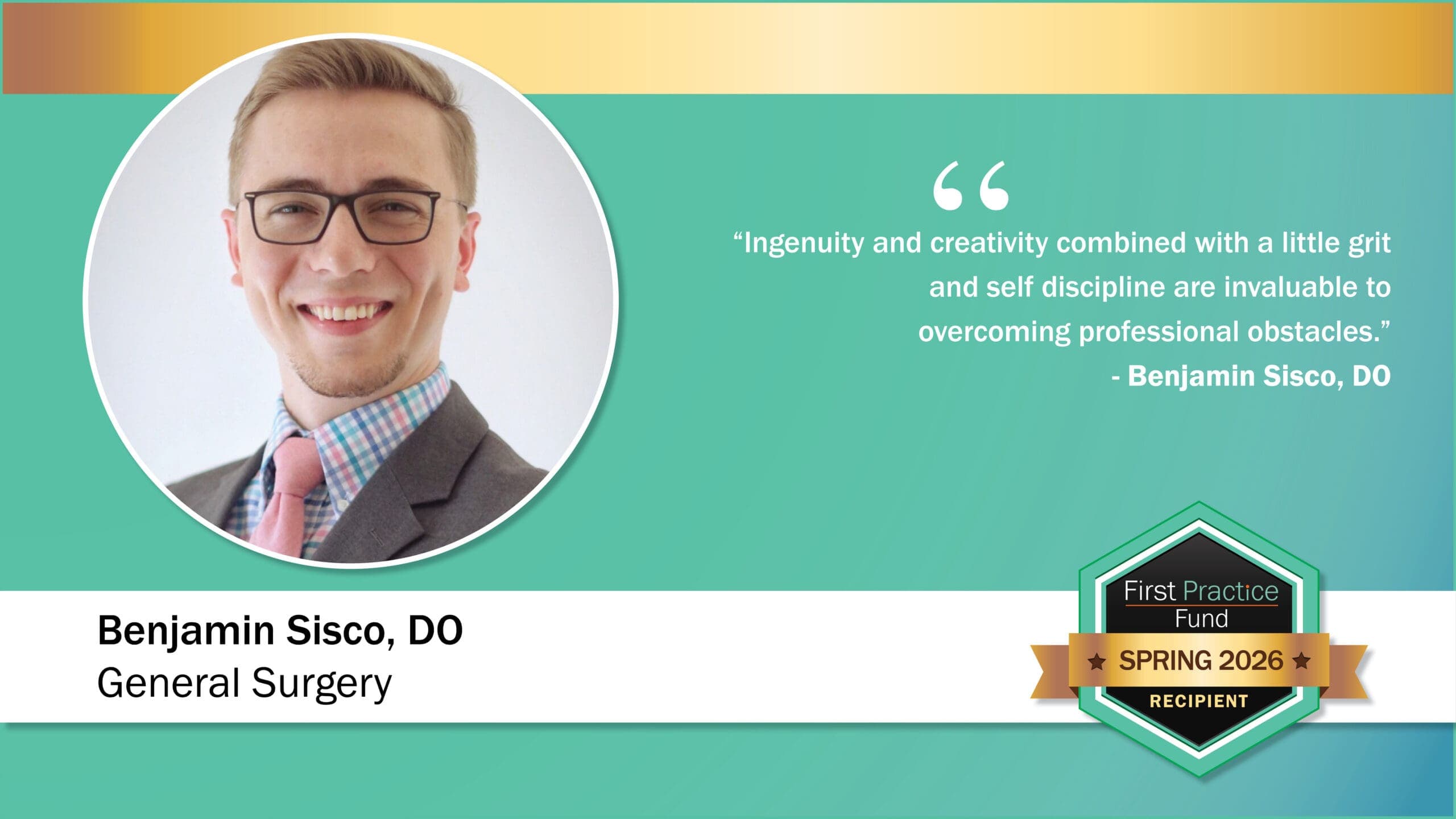
Meet Dr. Benjamin Sisco, First Practice Fund recipient
Nearly 60 million Americans live in rural communities but only about one in 10 of the nation’s general surgeons practice there. In 21 states, the surgeon-to-population ratio is less than adequate, with federal workforce models projecting the gap to keep widening for at least another decade as retirements outpace surgeons entering training. For rural families, that shortage means the difference between a same-day appendectomy and driving hours to reach one in time.
Benjamin Sisco, DO has seen that gap on two continents and now strives for a medical career built around closing healthcare access gaps in rural America and, eventually, overseas.
Currently in a general surgery residency, Dr. Sisco is one of nine recipients of PracticeLink’s Spring 2026 First Practice Fund, a competitive scholarship which awards $2,500 to aspiring physicians and advanced practice providers.
Dr. Sisco was recognized for his commitment to serving underserved populations through extensive mission work and his long-term goal of providing surgical care in resource-limited communities. Throughout his training, he has shown compassion, leadership, resilience and innovation.
With Scion Health as a primary sponsor and Ballad Health and Navigate as program sponsors, the Spring 2026 First Practice Fund used essay questions and applicant CVs to identify high-caliber medical trainees poised to lead the future of community-based healthcare. Dr. Sisco’s dedication to improving healthcare access, thoughtful approach to emerging technologies in medicine and clear vision for a career centered on service make him an outstanding representative of the next generation of physicians.
PracticeLink: Describe a time you witnessed or experienced a barrier to healthcare access, how it shaped your perspective on medicine and how you envision addressing such barriers in your future career.
Dr. Benjamin Sisco: My most significant personal exposure to inadequate healthcare access was on a surgical missions trip to Honduras during my undergraduate years. I joined a surgical team and traveled to the rural town of Guaimaca where we performed general surgical operations through a mission hospital. The people of that region were exceptionally poor; many surgeries were long delayed, partially because patients had to travel very far on foot. One such patient was a woman with significantly progressed breast cancer who unfortunately could not afford the appropriate workup or treatment from the nearest clinics more than 6 hours away. That whole experience, coupled with two other medical mission trips earlier in my life, were so impactful that I have since made it my goal to serve full time in an impoverished missional setting.
PL: Share an example of meaningful collaboration across a care team. What made it successful, and what did you contribute?
DR. SISCO: One of the most memorable and distinct patients I have had the pleasure of serving was a two-year-old Amish boy born with Hirschsprung’s. On my pediatric surgical rotation, this child arrived at the hospital for ileostomy reversal after having had a pull-through operation several months prior. His stay was complicated by an anastomotic leak requiring multiple take backs to the operating room. He was critically ill for the majority of my time with him but throughout that experience I watched as he and his family were guided through the healthcare system by many teams.
Our team provided the overarching surgical plan and worked in tandem with the pediatric ICU team who curated his nutrition, antibiotics and other medical aspects of care. The physical therapy team collaborated with us even while the boy was intubated and sedated, to make sure his joints and muscles did not become stiff or deconditioned. Many social workers looked ahead at the long-term dispositional needs such as home health and supplies. Clergy and a child-life specialist were at his bedside every day to provide moral and emotional support to the patient’s family.
These collaborations were successful because individually skilled and diligent experts in their fields communicated effectively with one another. A few months later, an update from a fellow resident reported the boy had fully recovered and was back at home. It was a deeply joyful experience for me to play a small role in what had been a massive collaborative effort for this little boy.
PL: Describe a professional challenge you faced in training, how you responded and what you learned.
DR. SISCO: In my third year of training, I was having difficulty with laparoscopy and the complex mechanical skills that it requires. After some research and discussion with attendings, it became clear there is no substitute for high-fidelity training simulators in the mastery of these techniques. Combining my background in woodworking with my enjoyment of a good project, I built an at-home laparoscopic simulator that uses a cellphone or iPad as both the camera and display, making it inexpensive and highly portable. This simulator significantly progressed my laparoscopic abilities and taught me ingenuity and creativity, combined with a little grit and self-discipline are invaluable to overcoming professional obstacles.
PL: Share your career goals and explain how First Practice Fund will help you achieve them.
DR. SISCO: I am currently applying for general surgery positions in rural cities across the north-east to begin my practice in July 2027. My desire is to transition to full-time overseas surgical missions within 3 years through a sending organization and mission hospital. With the First Practice Fund scholarship, my family and I can attend conferences such as GMHC (Global Mission Health Conference) to explore options in global healthcare. The scholarship can also support my interview travels, as many practice locations require flights and hotels which can incur significant personal cost. My hope is First Practice Fund can be a stimulant to my career as I approach the finish line of residency and look forward to serving an underserved community with general surgery.

