
 Share
Share- Export to PDF
 Listen
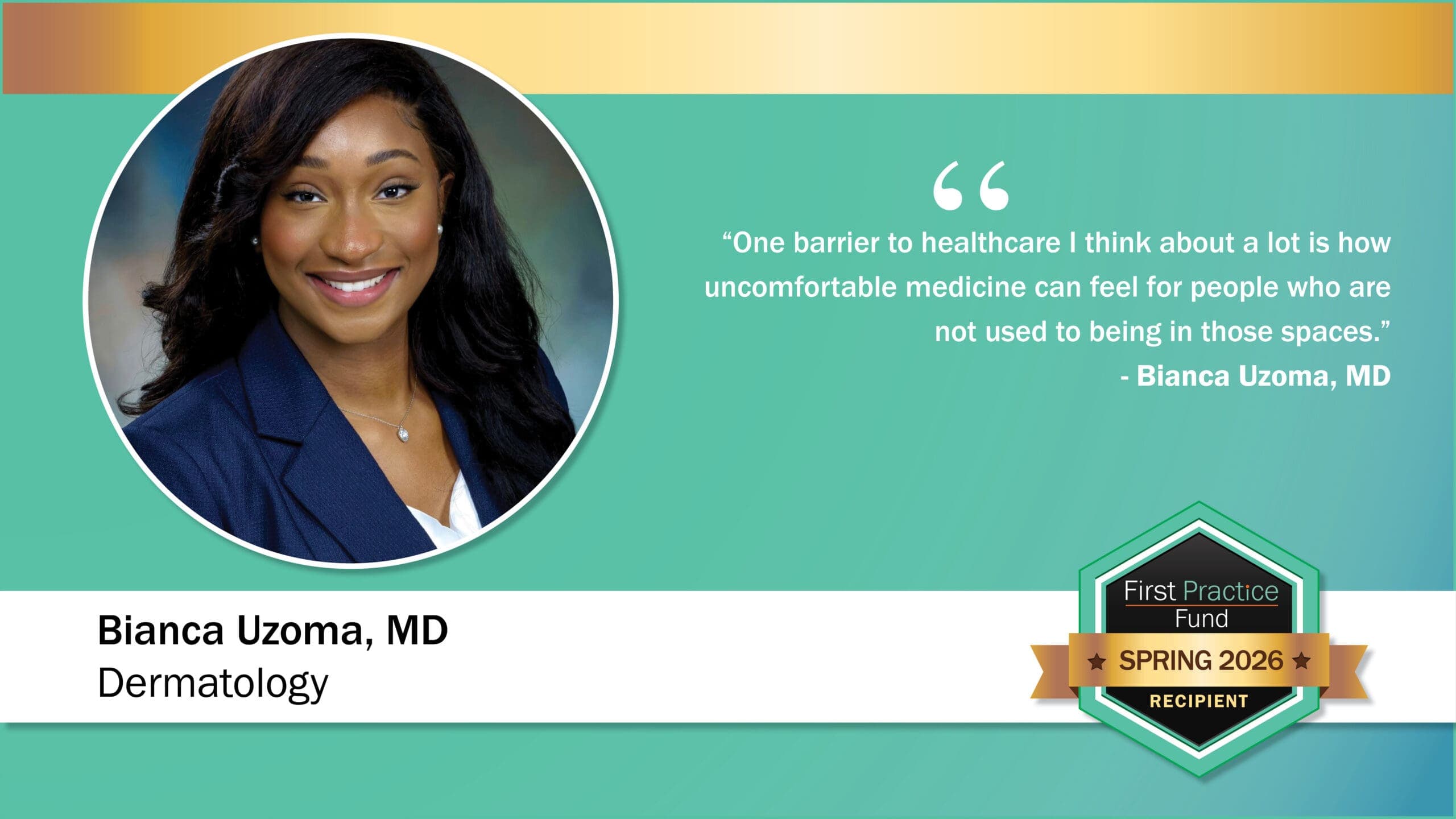
Meet Bianca Uzoma, First Practice Fund recipient
Skin cancer is the most diagnosed cancer in the country. For many of its most complex or recurring forms, Mohs micrographic surgery is the gold-standard treatment: a precise, tissue-sparing procedure that only a small number of specialists are trained to perform. In much of rural America, that expertise simply isn’t within reach. Patients often face long drives, long waits or care that arrives too late.
Bianca Uzoma, MD a dermatology fellow at Washington University in St. Louis, has set her sights on closing that gap. Her plan to build a Mohs practice in a high-need corner of rural Texas is a deliberate bet on bringing gold-standard cancer care to the people who currently go without. And, she wants her practice to be a pipeline to train the next generation of physicians. That second commitment matters more than it might first appear. Medicine struggles with thin mentorship pipelines for Black and Hispanic trainees. This gap, over time, translates into fewer advocates in the room for the very patients who need one most.
As one of nine recipients of PracticeLink’s Spring 2026 First Practice Fund, Dr. Uzoma is being recognized for a vision that treats access, education and equity as parts of the same mission.
First Practice Fund is a competitive scholarship from PracticeLink which awards $2,500 to aspiring physicians and advanced practice providers.
With Scion Health as a primary sponsor and Ballad Health and Navigate as program sponsors, the Spring 2026 First Practice Fund weighed essay questions and applicant CVs to identify high-caliber medical trainees poised to lead the future of community-based healthcare.
PracticeLink: Describe a time you witnessed or experienced a barrier to healthcare access, how it shaped your perspective on medicine and how you envision addressing such barriers in your future career.
Dr. Bianca Uzoma: One barrier to healthcare I think about a lot is how uncomfortable medicine can feel for people who are not used to being in those spaces. I grew up around people who were smart, resilient and resourceful but many of them distrusted healthcare systems or avoided care until things became severe. Not because they “didn’t care,” but because medicine often felt cold, expensive, confusing or judgmental.
As a resident, I see echoes of that all the time. Some of the patients I connect with most seem guarded at first. I understand that instinct. I know what it looks like when someone is trying to figure out whether they can trust the person in front of them.
That perspective has shaped the kind of physician I want to be. I take pride in being clinically strong but also in being approachable. I want patients to feel like they can ask questions, be honest and take up space in the room without feeling talked down to. To me, improving access includes making medicine feel human enough for people to come back.
PL: Share an example of meaningful collaboration across a care team. What made it successful, and what did you contribute?
DR. UZOMA: One of the most meaningful examples of collaboration I’ve experienced has been through our multidisciplinary cutaneous oncology clinic caring for patients with advanced CTCL. Some of the sickest patients in the hospital reveal themselves through the skin first.
What makes that clinic work is that no single specialty can manage these patients alone. Dermatology, oncology, internal medicine, wound care, pathology and radiology are constantly in conversation, each bringing a different piece of the puzzle. Sometimes my contribution is procedural, performing biopsies or helping guide diagnosis through cutaneous findings. Other times it is helping longitudinally manage painful skin disease that dramatically affects quality of life.
What I value most is the shared sense of everyone working toward the same goal: keeping very complex patients alive while also preserving dignity and comfort. It’s one of the clearest examples I’ve seen of medicine functioning the way it should.
PL: Describe a professional challenge you faced in training, how you responded and what you learned.
DR. UZOMA: One of the biggest professional challenges during residency was learning how to balance a high level of responsibility across multiple roles at once. In addition to the clinical demands of dermatology training, I served as chief resident during a busy year of fellowship applications, board preparation, research and patient care. Chief residency is rewarding, but also requires constant problem-solving, leadership and accountability behind the scenes, often while quietly managing your own workload.
Coming from a background with limited financial and professional safety nets added another layer of pressure. I have always felt a strong responsibility to perform well, not just for myself but because opportunities in medicine have never felt guaranteed to me. At times that weight was challenging.
What helped most was learning how to stay grounded and disciplined even during stressful periods. I became more comfortable leaning on my team, communicating clearly and focusing on consistency over perfection. The experience strengthened my ability to lead under pressure while still showing up fully for patients and colleagues. It taught me that professionalism is less about appearing effortless and more about remaining dependable, thoughtful and steady when a lot is being asked of you.
PL: Share your career goals and explain how First Practice Fund will help you achieve them.
DR. UZOMA: My long-term goal is to practice Mohs surgery in a rural, high-need area of Texas where access to dermatologic and skin cancer care is limited. I want to build a practice that provides high-level surgical care while also serving as a dependable local resource for patients who might otherwise face long wait times, delayed diagnoses or the burden of traveling hours for treatment. I also hope to build a practice that remains connected to teaching and mentorship. Education has been one of the most meaningful parts of my training, and I want future students and residents to feel welcomed, challenged and supported within my clinic environment.
First Practice Fund would help ease some of the financial strain that comes with transitioning from residency to fellowship and eventually independent practice. The ABD board examination alone costs over $2,000. Then, as I prepare to transition into fellowship training while still living on a resident salary, PracticeLink’s scholarship would allow me to focus more fully on training and long-term career development.

