
Meet Jocelyn Gonzalez Lopez, First Practice Fund recipient
By PracticeLink August 21, 2026
 Share
Share- Export to PDF
 Listen
Meet Jocelyn Gonzalez Lopez, First Practice Fund recipient
Hospitalists are usually internal medicine, family medicine or pediatrics physicians who choose to focus on inpatient care. They typically start their careers carrying approximately $250,000 in educational debt. Even so, the need for hospitalists nationwide is growing as physician shortages loom and patient populations age.
For Jocelyn Gonzalez Lopez, MD, those numbers are the backdrop to a career built around one idea: healthcare should feel less alienating to the people who need it most. As the daughter of immigrants and a first-generation, bilingual physician, she has spent her training bridging the cultural, language and health-literacy gaps that too often separate patients from the care they’re being given. In hospital corridors where trust can evaporate fast, she has chosen to be the one who steps into that uncertainty and says (in Spanish or English), “You’re not alone here.”
Dr. Gonzalez is one of nine recipients of PracticeLink’s Spring 2026 First Practice Fund, a competitive scholarship which awards $2,500 to aspiring physicians and advanced practice providers.
Dr. Gonzalez was recognized for her unwavering commitment to serving medically underserved populations, advocating for health equity and providing compassionate, patient-centered care. Drawing from her experiences as the daughter of immigrants and a bilingual physician, she has consistently worked to bridge cultural, language and health literacy barriers for vulnerable patients.
With Scion Health as a primary sponsor and Ballad Health and Navigate as program sponsors, the Spring 2026 First Practice Fund combined essay questions and applicant CVs to identify high-caliber medical trainees poised to lead the future of community-based healthcare. Throughout her training, Dr. Gonzalez has demonstrated exceptional leadership, resilience and dedication to multidisciplinary collaboration to improve outcomes for patients in underserved communities.
PracticeLink: Describe a time you witnessed or experienced a barrier to healthcare access, how it shaped your perspective on medicine and how you envision addressing such barriers in your future career.
Dr. Jocelyn Gonzalez Lopez: As the daughter of immigrant parents, I learned firsthand minority communities uniquely encounter disparities in health care due to several cultural and socioeconomic factors. One of my first patient interactions as a medical student reinforced this shared experience. Mr. X, who recently immigrated from Mexico to Michigan, had just been diagnosed with systemic lupus erythematosus (SLE). While our team focused on diagnostics and management plans, I noticed he seemed overwhelmed and somewhat confused.
Through our discussions, I discovered that he had been previously seen by many doctors yet seemed to lack a complete understanding of SLE. He reminded me of the language and cultural barriers my own family members face when interacting with the healthcare system. I felt immense gratitude for my ability to act as a bilingual Spanish-speaking provider and advocate for our patient during a complex and multidisciplinary hospital admission. As his care was coordinated across specialties, he looked to our team for advice and reassurance.
It was in this moment that my passion for advocacy, support for medically underserved populations, and broad-spectrum clinical care came together in clear focus. As a soon-to-be hospitalist, his story continues to remind me of the importance of addressing social determinants of health in the hospital setting, such as recognizing limitations in health care literacy, ensuring access to translators and multidisciplinary collaboration to ensure discharge plans account for socioeconomic circumstances and empowering patients to actively participate in their health. His story reinforced my commitment to providing patient-centered care that addresses not only medical needs but also social and systemic factors that shape health outcomes.
PL: Share an example of meaningful collaboration across a care team. What made it successful, and what did you contribute?
DR. GONZALEZ: A particular experience that required multidisciplinary collaboration was during one of my inpatient rotations as a senior resident. I was caring for a patient who wanted to self-discharge from the hospital. The situation became stressful because the patient was agitated, distrustful of the team and did not have decision-making capacity at the time. While we wanted to respect the patient’s autonomy, we also wanted to ensure safety.
What made the situation successful was how closely the entire team worked together. Nurses were the first to recognize changes in the patient’s behavior and helped de-escalate tense moments. Psychiatry evaluated the patient’s capacity, while social work and case management worked on finding resources and a safe discharge plan given the patient’s housing instability.
As the senior resident, I spent a lot of time at the bedside talking with the patient, listening to their frustrations and trying to build trust rather than escalating the situation further. I also helped keep communication clear between different teams so everyone was on the same page regarding the plan.
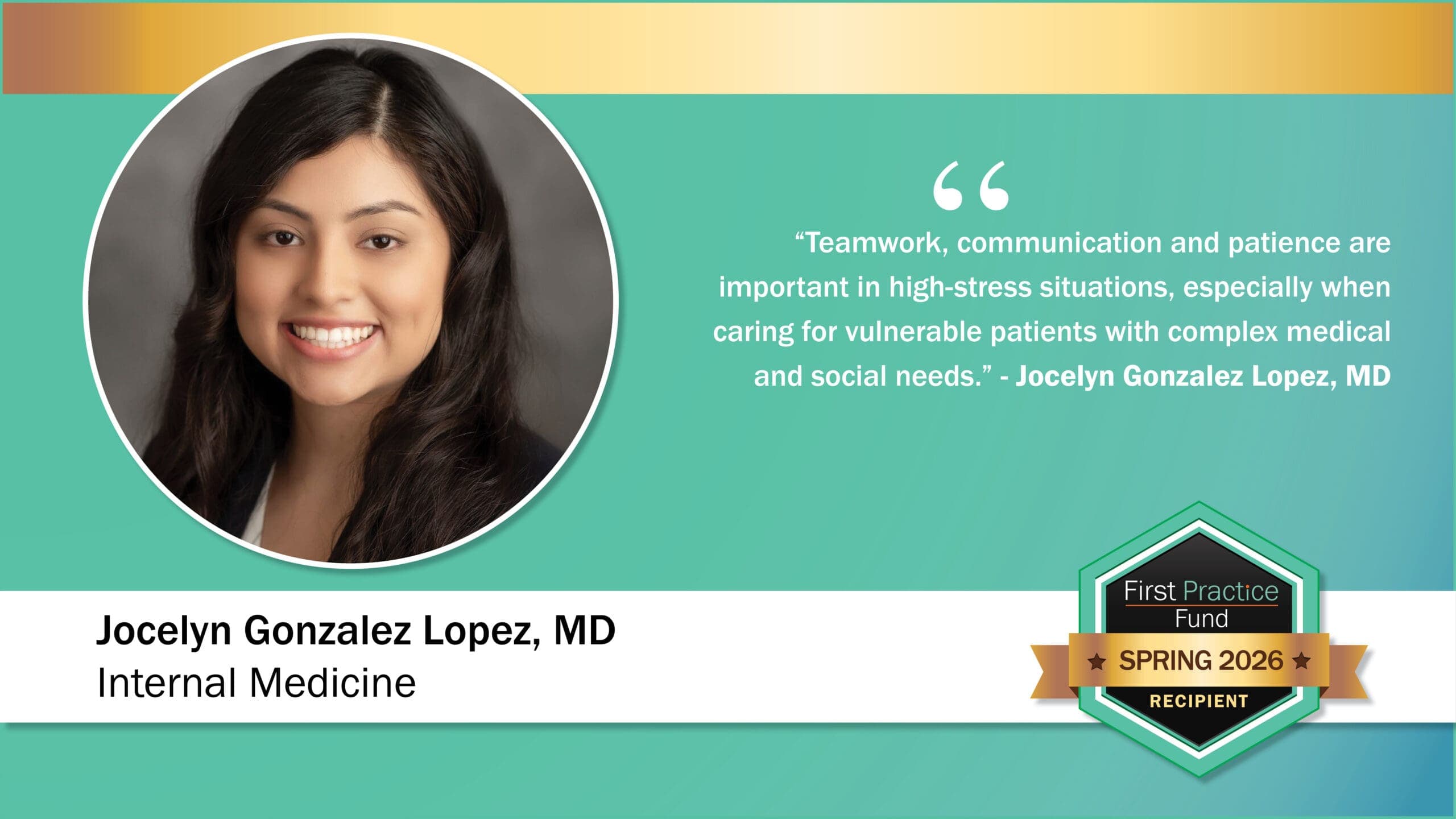
Eventually, after the patient’s condition improved and they regained capacity, we were able to discharge them safely with follow-up resources in place. That experience taught me how important teamwork, communication and patience are in high-stress situations, especially when caring for vulnerable patients with complex medical and social needs.
PL: Describe a professional challenge you faced in training, how you responded and what you learned.
DR. GONZALEZ: As the daughter of immigrants from humble beginnings, and as a first-generation physician entering residency, I often questioned whether I truly belonged in medicine. During my training, there were times when I hesitated to speak up during rounds. I did not want to be wrong, because I felt it would reinforce the idea that I did not belong. Recognizing “imposter syndrome” was limiting my growth, I sought mentorship through formal coaching programs and senior and faculty mentors.
They helped normalize these experiences and helped me build a tangible plan to work through my challenges. I found that as I became more confident in myself and my clinical reasoning, I also became a stronger advocate for my patients. Additionally, it taught me the importance of resilience and self-compassion, and has shaped the kind of physician I hope to be: one who fosters supportive team environments, mentors students and trainees and advocates for patients.
PL: Share your career goals and explain how First Practice Fund will help you achieve them.
DR. GONZALEZ: During residency, I had the privilege of participating in Transforming Education and Community Health, a program that allowed me to care for medically underserved patients in the inpatient setting and subsequently follow them in the outpatient setting as well. This deepened my understanding of how hospital decisions impact long-term outcomes. I want my career in Hospital Medicine to focus on serving the community I grew up in by ensuring that all patients receive high-quality care, experience safe discharges and have reduced risk of readmissions.
Furthermore, I have always been passionate about health care policy and advocacy. Prior to residency, I was actively involved in organizations such as the Latino Medical Student Association Policy Committee, where I advocated for equitable policies on Capitol Hill. I hope to re-engage with similar advocacy efforts as a practicing physician. A First Practice Fund scholarship from PracticeLink will provide meaningful support during a particularly vulnerable period as I prepare for board examinations.

