
 Share
Share- Export to PDF
 Listen
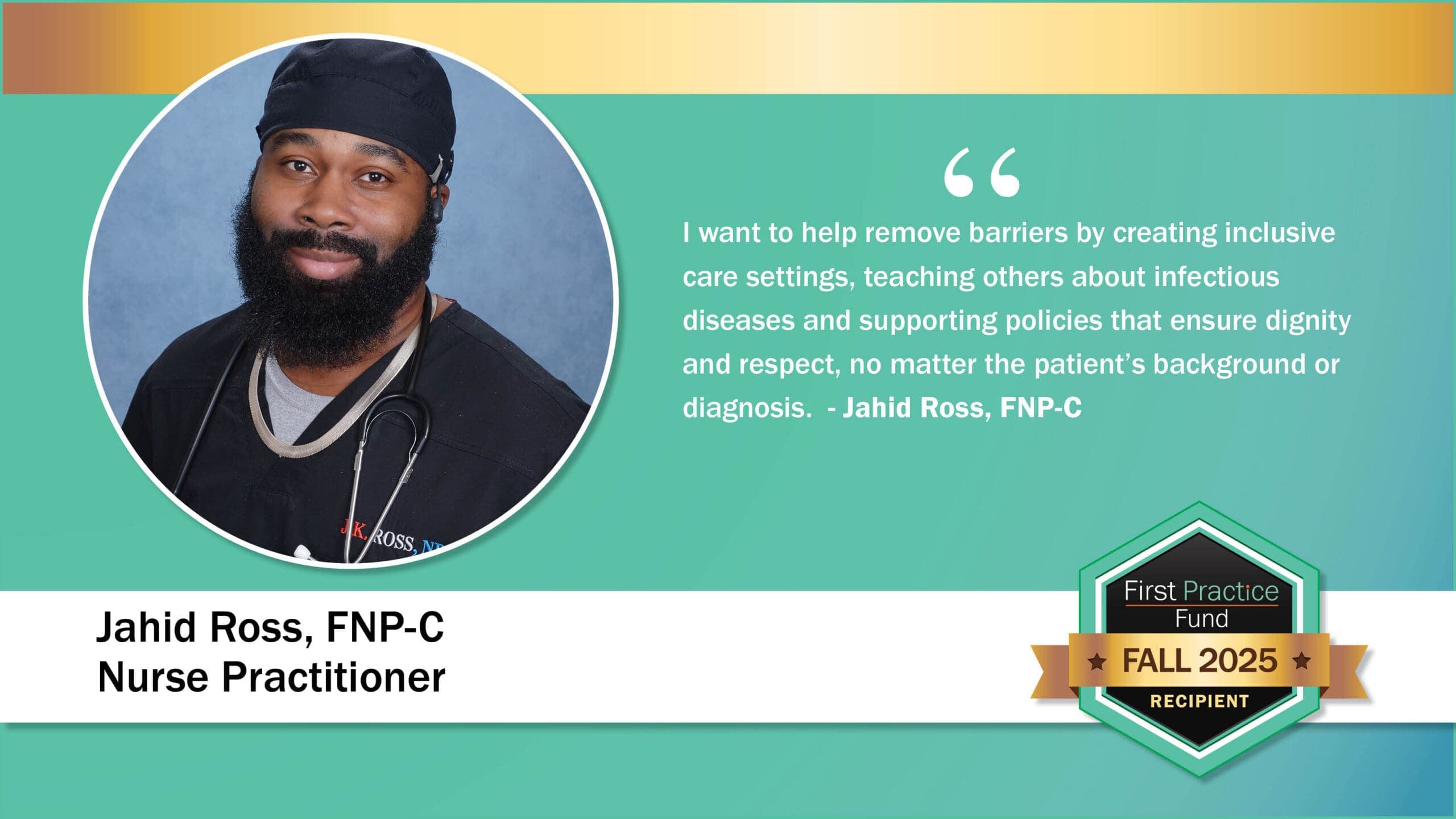
Meet Jahid Ross, First Practice Fund recipient
Beyond credentials and policy, healthcare is a complex ecosystem of ethics, safety and trust. For aspiring family nurse practitioner, Jahid Ross, the bridge between medical knowledge and the role successful support plays in patient outcomes is self-awareness and consistent values.
A registered nurse working on his doctor of nursing practice (DNP), Ross is one of nine recipients of PracticeLink’s Fall 2025 First Practice Fund, a competitive scholarship which awards $2,500 to aspiring physicians and advanced practice providers. Applications are now being accepted for Spring 2026.
Sponsored by Premier Health, recipients of the Fall 2025 First Practice Fund were selected based on academic and clinical promise, as well as a genuine commitment to the values that define excellent, ethical care. Ross’ winning entry illustrated an expansive and deeply personal vision to close the gap between mental and physical health, mentor the next generation of clinicians and advocate for patients often overlooked by systems meant to serve them.
PracticeLink: Describe a time you witnessed or experienced a barrier to healthcare access, how it shaped your perspective on medicine and how you envision addressing such barriers in your future career.
Jahid Ross: When I worked as a certified nursing assistant (CNA), I cared for a patient who was an inmate and HIV-positive. I saw staff hesitate to interact with him because they were afraid or held biases about his diagnosis. He often seemed isolated and had little human connection, which left a strong impression on me. Watching someone be treated differently because of a medical condition and social status showed me how discrimination can create real barriers to care, both physically and emotionally.
I made sure to treat him with compassion and professionalism, giving him the same respect as any other patient. I reminded myself my job was to care for his needs, not judge him, since I could never know his full story or what he had been through.
That experience changed how I see healthcare. I learned fair care is more than just treatment. It also takes empathy, education and advocacy to overcome bias and fear. As a future nurse practitioner, I want to help remove these barriers by creating inclusive care settings, teaching others about infectious diseases and supporting policies that ensure dignity and respect for every patient, regardless of their background or diagnosis.
PL: Share an example of meaningful collaboration across a care team. What made it successful and what did you contribute to it?
JR: During the COVID-19 pandemic, meaningful collaboration across the care team was vital to ensuring safe and compassionate care. One example was our hospital’s multidisciplinary “COVID response team,” which included nurses, physicians, respiratory therapists and infection control staff. We met daily to review patient updates, PPE protocols and staffing needs, ensuring consistent communication and quick problem-solving.
As a nurse, I played a key role in both patient care and staff support. In addition to monitoring patients and advocating for their needs, I helped orient and teach new graduate nurses who had entered practice during the crisis. I provided hands-on guidance in infection control, PPE donning and doffing and managing respiratory distress safely. I also emphasized teamwork, helping build confidence in high-pressure situations.
This collaboration succeeded because of open communication, mutual respect and a shared commitment to learning and patient safety. By mentoring new nurses and fostering teamwork across disciplines, we were able to deliver coordinated, compassionate care despite unprecedented challenges.
PL: Describe a professional challenge you faced in training, how you responded and what you learned.
JR: One challenge I encountered during nurse practitioner training was gaining self-assurance in independently managing complex patients while transitioning from the RN role. As a novice NP student, I occasionally felt uncertain making diagnostic choices or starting treatment plans without immediate confirmation from my preceptor. I was concerned about overlooking subtle signs or making mistakes that could jeopardize patient safety.
To tackle this, I concentrated on preparation and self-reflection. Prior to each clinical shift, I reviewed the latest evidence-based guidelines and anticipated potential scenarios for my assigned patients. During rounds, I focused on delivering brief assessments and suggesting care plans, encouraging constructive feedback from my preceptor. I also reflected after each shift, highlighting areas for improvement and discussing how to apply clinical reasoning with greater confidence.
As time went on, I realized that growing as a professional means accepting uncertainty and trusting my clinical judgment but also knowing when to ask others for input. This experience helped me build confidence, improve my critical thinking and find the right balance between working independently and as part of a team. These skills are key to safe and effective NP practice.
PL: Share your career goals and explain how First Practice Fund will help you achieve them.
JR: As a family nurse practitioner, my career goal is to expand my expertise by becoming a psychiatric mental health nurse practitioner and working as a hospitalist. I have a strong desire to help individuals with complicated needs holistically by combining mental and physical health services. Earning my DNP will allow me to share my experience by teaching and mentoring new nurses, focusing on clinical training and real-world application rather than traditional lectures. While I don’t currently aspire to leadership or administrative roles, having the DNP will keep that path open for the future.

