Nursing demand in rural health, home health and geriatrics care
By Georgia Scott October 7, 2026
 Share
Share- Export to PDF
 Listen
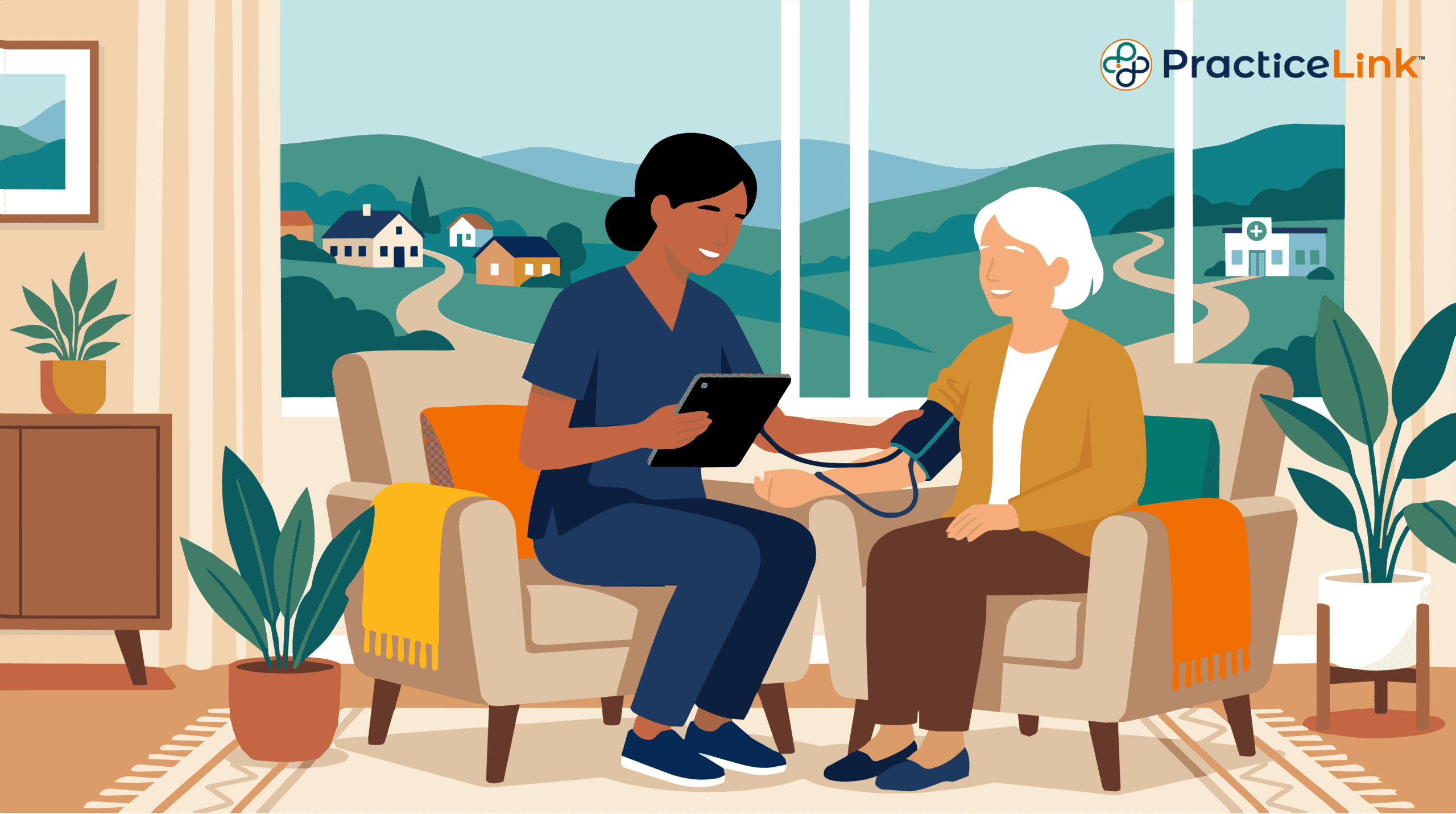
Nursing demand in rural health, home health and geriatrics care
The national nursing shortage is not evenly distributed, and nursing demand in rural health is becoming especially significant. While some metro markets are approaching balance, the gap between supply and demand is widening sharply in the settings that serve the country’s most vulnerable populations. According to the Health Resources and Services Administration (HRSA), non-metro areas are projected to face a far steeper registered nurse shortfall than metro areas — with projections showing an 11% shortage in nonmetropolitan regions versus just 2% in metro areas by 2038. For nursing students and career-changers weighing where to build a career, rural health, home health, long-term care and geriatrics are quietly becoming some of the most stable, purpose-driven and financially supported destinations in the profession.
Rural nursing jobs: The steepest shortage gap
Rural America has the most acute nursing deficit in the country. HRSA data show non-metro areas are expected to see a substantially greater shortage of RNs than metro areas by 2027, and small rural hospitals already spend a disproportionate share of their budgets on temporary staffing to fill the gap compared with urban facilities. Rural nurses also tend to work longer shifts and take on broader scopes of practice, often serving as the sole clinical presence in a clinic or emergency department for miles.
This scarcity translates into leverage for nurses willing to relocate. Rural facilities frequently offer sign-on bonuses, expanded scopes of practice, and eligibility for federal loan forgiveness unavailable in oversupplied urban markets — making rural nursing jobs an increasingly strategic entry point for new graduates.
Home health nurse careers: Growth outpacing the workforce
As health systems push to reduce hospital stays and readmissions, more skilled nursing care is shifting into patients’ homes — and the workforce hasn’t kept pace. The Administration for Community Living projects the population age 85 and older will more than double between 2022 and 2040, and Medicaid-funded home- and community-based services have grown faster than the workforce providing them. Industry forecasts for 2026 point to continued labor shortages in home health even as demand for chronic disease management and post-acute care in the home accelerates.
For nurses, home health nurse careers offer autonomy, one-on-one patient relationships, and flexible scheduling — while remaining squarely within HRSA’s long-term services and supports (LTSS) priority area, which the agency has flagged as needing a more robust, well-trained workforce as the Baby Boom generation fully enters retirement age by 2030.
Long-term care nursing: The most severe labor gap in health care
Long-term care facilities — nursing homes, assisted living and skilled nursing units — report the most severe workforce gap of any healthcare sector. It is projected there will be millions of unfilled long-term care jobs nationally by the early 2030s, and workforce shortages in long-term care facilities are estimated to cost the sector billions annually in reduced patient capacity. Low wages relative to workload have historically driven turnover but that dynamic is shifting as facilities compete harder for licensed staff and as state governments intervene with targeted incentives.
Several states have built loan repayment and tuition assistance programs specifically aimed at long-term care nursing and geriatric nursing, recognizing that this sector cannot rely on the general RN pipeline alone.
Geriatric nursing careers: Built for the coming decade
Geriatric nursing sits at the intersection of all three settings above. It is arguably the specialty with the clearest long-term demand curve in the profession. By 2030, one in five Americans will be 65 or older — a demographic shift HRSA has explicitly built federal policy around. The agency’s Geriatrics Workforce Enhancement Program (GWEP) funds partnerships between nursing and medical schools and community-based organizations to train the primary care and geriatric workforce needed to serve older adults. GWEP has already trained tens of thousands of students and fellows in geriatric-specific training placements and fellowships since its inception.
Nurses who pursue geriatric nursing careers— through certification or hands-on experience in skilled nursing, home health or rural primary care — are positioning themselves for a specialty where demand is not cyclical but demographic, and therefore durable.
Federal and state nursing workforce & loan repayment programs
Career paths supported by federal and state initiatives:
Title VIII Nursing Workforce Development Programs (HRSA, Public Health Service Act) fund nursing education, traineeships, and retention efforts targeting medically underserved and rural communities, including the Advanced Nursing Education Workforce Program and Comprehensive Geriatric Education programs.
Nurse Corps Scholarship and Loan Repayment Program offers scholarships and loan repayment for nurses and nursing students who commit to working at HRSA-designated Critical Shortage Facilities, including many rural, long-term care, and safety-net sites.
NHSC Loan Repayment Programs, including the Rural Community LRP, tie federal loan forgiveness directly to service in designated shortage areas — up to $105,000 for full-time rural clinicians and up to $80,000 for primary care clinicians in HRSA-designated HPSAs nationwide.
State loan repayment and incentive programs, often administered through state Offices of Rural Health, Medicaid agencies or nursing workforce centers, frequently supplement federal awards for nurses in rural, long-term care or geriatric placements — terms vary significantly by state.
HRSA’s Geriatrics Workforce Enhancement Program (GWEP) funds training pipelines aimed squarely at preparing nurses and other clinicians for the aging population.
Frequently Asked Questions
Why is there such a big nursing shortage in rural areas?
Non-metro areas are estimated to face a far steeper RN shortage than metro areas — roughly 11 percent in nonmetropolitan regions versus 2 percent in metro areas by 2038. This is due to smaller hiring pools, longer recruitment timelines and difficulty attracting specialty-credentialed nurses to rural facilities.
What loan repayment programs are available for nurses working in underserved areas?
The NHSC Loan Repayment Program and NHSC Rural Community Loan Repayment Program offer nurse practitioners and registered nurses up to $80,000–$105,000 in tax-advantaged loan repayment for service in HRSA-designated shortage areas. The Nurse Corps Scholarship and Loan Repayment Program offers similar support at Critical Shortage Facilities, and many states run supplemental programs for rural, long-term care or geriatric placements.
Is home health nursing in demand?
Yes. The population age 85 and older is projected to more than double between 2022 and 2040, and Medicaid-funded home- and community-based services have grown faster than the workforce providing them, creating sustained demand for home health nurses.
Which nursing specialty has the most severe workforce shortage?
Long-term care reports one of the most severe labor gaps in the health care sector, with industry analysis projecting millions of unfilled long-term care jobs nationally by the early 2030s as the population ages and historically low wages have driven high turnover.
What is the Geriatrics Workforce Enhancement Program?
GWEP is a HRSA-funded initiative under Title VII of the Public Health Service Act that funds partnerships between nursing and medical schools and community organizations to train the primary care and geriatric workforce needed to serve the growing population of older adults.
Nursing students often gravitate toward acute-care hospital jobs by default, but the data point elsewhere. Rural facilities, home health agencies, long-term care providers and geriatric-focused practices face the steepest projected shortages. Additionally, they have the deepest well of federal and state financial support designed to recruit nurses into them. For a new or transitioning nurse, these underserved settings offer a career built on the demographic and policy trends most likely to define health care for the next two decades.