
 Share
Share- Export to PDF
 Listen
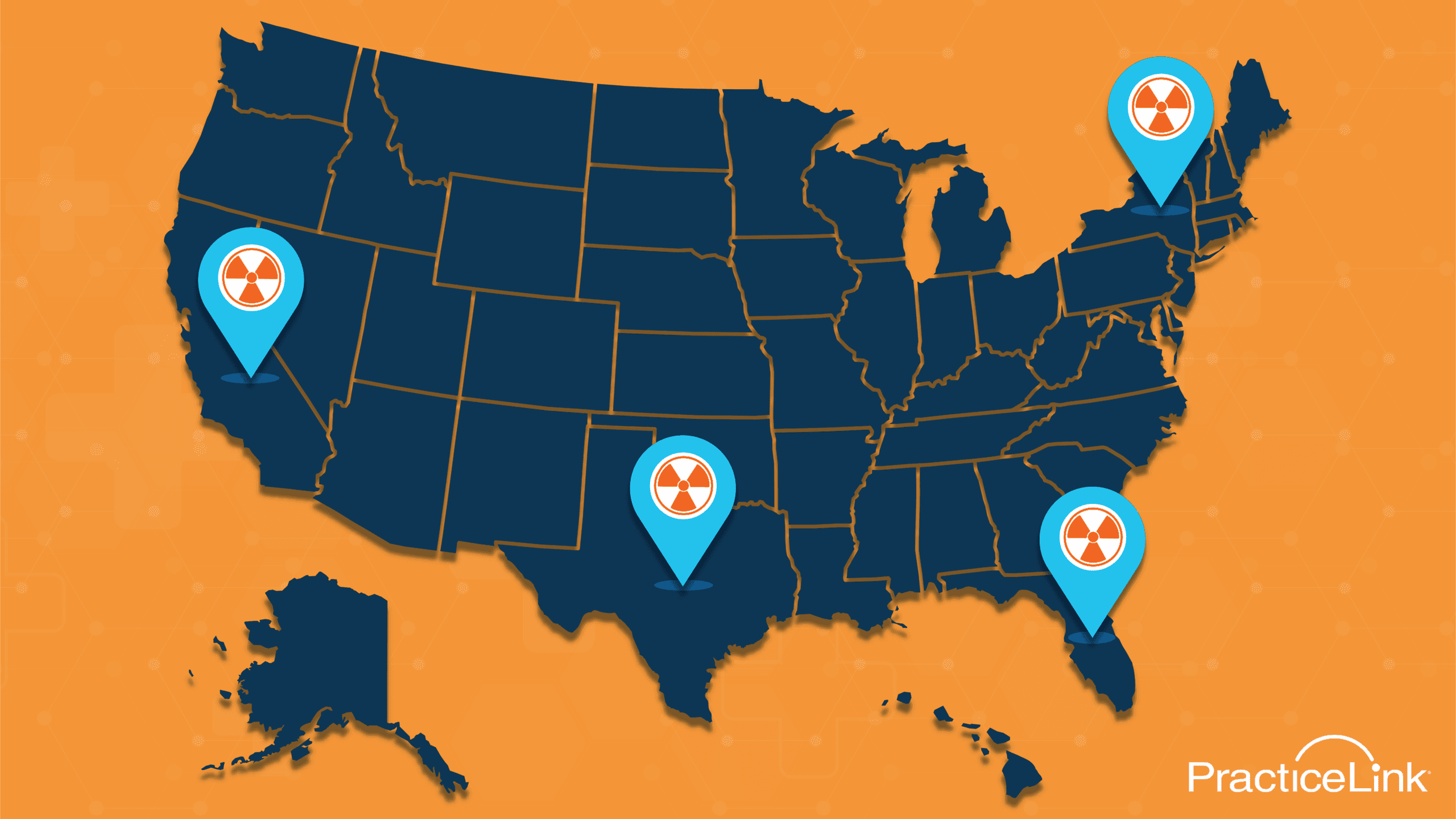
Radiology jobs by location
Where you practice radiology can be just as important as what you practice. It shapes everything from compensation and call schedules to daily workload and long-term career satisfaction.
Radiology jobs vary widely by location. Demand can spike in one state while leveling off in another. Metro areas may offer subspecialty depth and academic pathways, while rural regions often provide broader scope, stronger incentives and greater community impact. Understanding these geographic differences helps you move beyond whether to change jobs and focus on where your career will thrive.
In your job search, you’ll look at radiology jobs by location—from state-level demand to urban and rural opportunities—so you can evaluate your options with clarity and confidence.
Why location matters in the radiology job market
Two identical radiology roles can feel very different depending on where they’re located. Geography influences demand, compensation, workload and lifestyle in ways that directly affect career satisfaction.
How population growth impacts radiology demand
States and regions experiencing population growth tend to see increased imaging volume, hospital expansion and outpatient development. Growing communities require more diagnostic imaging across emergency care, oncology, cardiology and preventive services thus driving sustained demand for radiologists.
Sun Belt states, fast-growing suburbs and retirement destinations often post consistent radiologist job openings as healthcare systems scale to meet demand.
Regional differences in healthcare systems
Healthcare delivery looks different across the country. Some regions rely heavily on large health systems and academic medical centers, while others are dominated by independent hospitals or private practices. These structural differences affect:
- Subspecialty opportunities
- Call coverage expectations
- Employment models (hospital employed vs private practice)
Understanding regional healthcare dynamics helps you anticipate what a role will look like day to day.
Cost of living vs compensation tradeoffs
Salary alone doesn’t tell the full story. A higher compensation package in a high-cost metro area may offer less purchasing power than a slightly lower salary in a more affordable region. Evaluating radiology jobs by location means balancing income with housing, taxes, commute time and overall quality of life.
If you’re early in your search, starting with a broad view of available radiology jobs can help you see how these factors intersect across regions.
Radiology jobs by state
Searching radiology jobs by state allows you to compare opportunities at a macro level—before narrowing down to cities, systems or practices. Each state offers distinct advantages in terms of salary ranges, cost of living, licensing requirements and demand for subspecialties. By starting with a state-level view, you can identify regions that align with your lifestyle preferences, career goals and compensation expectations.
States with the highest demand for radiologists
States facing physician shortages, rapid population growth or aging demographics tend to have the strongest ongoing demand. These markets often offer:
- Faster hiring timelines
- More flexible contract terms
- Broader role definitions
Demand can be especially high in states with large rural footprints or expanding suburban healthcare networks.
States with the most radiology job openings
Large states with dense healthcare infrastructure naturally generate more total job postings. However, volume doesn’t always equal accessibility—competition can vary significantly by region and subspecialty.
Many radiologists begin their search through radiology jobs by state pages to identify where opportunities cluster before diving deeper.
States offering competitive compensation
Compensation trends often reflect supply-and-demand dynamics. States with fewer radiologists per capita or underserved rural areas may offer higher base salaries, signing bonuses or loan repayment incentives.
Popular search destinations include:
- Radiology jobs in Texas
- Radiology jobs in California
- Radiology jobs in Florida
- Radiology jobs in New York
A state-level view helps you spot patterns—but the most meaningful differences often emerge at the city or community level.
Radiology jobs in major metro areas
For many radiologists, large cities remain a top destination due to professional variety and lifestyle amenities. Metropolitan areas typically feature the highest concentration of radiology positions across multiple specialties, from interventional radiology at trauma centers to breast imaging at dedicated women’s health facilities.
Radiology jobs in large cities
Major metro areas typically offer:
- High patient volume
- Access to advanced imaging technology
- Opportunities in tertiary and quaternary care
Urban markets often support subspecialty practices and hybrid academic-clinical roles, appealing to radiologists seeking focused expertise.
Academic vs private practice roles in metro areas
Cities commonly host academic medical centers alongside private groups and hospital-employed models. Academic roles may emphasize teaching and research, while private practices often focus on efficiency, productivity and partnership tracks.
Understanding the local mix helps clarify expectations around workload, compensation structure and career trajectory.
Competition and subspecialties in urban markets
Large metro areas can be competitive, particularly for highly desirable subspecialties or lifestyle-friendly schedules. Subspecialties often strengthen candidacy, while flexibility on schedule or call coverage can open additional doors.
If you’re searching locally, using radiology jobs near me filters can surface nearby opportunities you may not have considered.
Rural vs urban radiology jobs
Geographic contrast becomes most apparent when comparing rural and urban opportunities. Choosing between these settings requires honest reflection about your professional priorities and personal values.
Rural practices may mean being the sole radiologist or part of a small team, leading to greater autonomy but also more call responsibilities and less immediate peer support. Urban environments provide collegiality and backup coverage but can feel more corporate or bureaucratic.
Benefits of rural radiology jobs
Rural radiology roles are often among the most in-demand positions nationwide. Benefits may include:
- Strong negotiating leverage
- Broader case mix
- Meaningful community impact
Many rural hospitals prioritize long-term retention, creating supportive environments for radiologists who value stability.
Workload and compensation differences
Rural positions may involve a wider scope of practice, while urban roles tend to be more specialized. Compensation packages in rural areas can be highly competitive, sometimes including incentives not commonly offered in metro settings.
Lifestyle considerations
Lifestyle preferences matter. Some radiologists value shorter commutes, outdoor access or tight-knit communities, while others prioritize cultural amenities and professional density. Your location choice directly impacts how you spend time outside work, whether that means skiing on weekends, attending theater performances, coaching youth sports or simply enjoying a quick bike ride home for lunch. The right environment supports hobbies, relationships and personal growth.
Regional trends in radiology hiring
Understanding broader radiology job market by region trends can help you anticipate where opportunities are headed—not just where they are today. Population migration patterns reveal which states are gaining residents and may need expanded imaging services, while healthcare policy changes at the state level can signal shifts in reimbursement or scope of practice. Some regions are investing heavily in teleradiology infrastructure, potentially changing the nature of local opportunities.
Sun Belt growth and radiology demand
Southern and southwestern states continue to experience population inflows, driving healthcare expansion. Imaging services grow alongside emergency departments, cancer centers and outpatient facilities.
Regional hospital expansion trends
Health systems are investing in regional hubs, ambulatory imaging centers and specialty care facilities—often outside traditional urban cores. These expansions create new radiology roles in suburban and secondary markets.
Telehealth’s Impact on location flexibility
Teleradiology has added flexibility to where radiologists live versus where they work. While not universal, remote and hybrid models are increasingly common, especially for overnight coverage or subspecialty readings.
How to choose the right location for your radiology career
The right location balances professional opportunity with personal priorities. Think beyond your immediate situation and consider where you want to be in five or ten years, both professionally and personally.
Aligning location with lifestyle goals
Consider what matters most at this stage of your life—schedule predictability, career advancement, proximity to family or outdoor access. Location directly shapes these factors.
Evaluating cost of living
Compare compensation alongside housing, taxes, childcare and commuting costs. A location that looks attractive on paper may feel very different in practice.
Family, schools and community considerations
For many radiologists, family needs play a central role in relocation decisions. School quality, spousal employment opportunities and community fit all deserve attention alongside professional factors.
Finding radiology jobs by location on PracticeLink
PracticeLink helps you explore radiology opportunities with geography in mind—without pressure to relocate before you’re ready.
Searching jobs by state or city
You can browse radiology jobs by state, region or city to quickly identify markets that align with your goals.
Creating location-based job alerts
Setting up job alerts allows you to monitor opportunities in specific areas—whether you’re actively searching or just staying informed.
Working with recruiters who understand regional markets
PracticeLink recruiters understand regional hiring trends and can help match you with opportunities that fit both your professional background and geographic preferences.
- Browse radiology jobs by location
- Create a location-based job alert
Frequently asked questions about radiology jobs by location
Which states have the most radiology job openings?
Large and fast-growing states tend to post the most openings, though demand varies by region, subspecialty and practice setting.
Are radiology jobs more competitive in major cities?
Yes, competition is often higher in large metro areas, particularly for subspecialized or lifestyle-focused roles.
Do rural radiology jobs pay more?
Rural positions may offer higher compensation or additional incentives due to sustained demand and workforce shortages.
Can radiologists work remotely while living anywhere?
Some radiologists can work remotely through teleradiology or hybrid roles, though requirements vary by employer and subspecialty.
How does cost of living affect radiologist salary?
Cost of living significantly impacts purchasing power. A lower salary in an affordable region may stretch further than a higher salary in a high-cost city.
Are radiologists willing to relocate in high-demand areas?
Many radiologists consider relocation when opportunities align with professional goals, family needs and lifestyle preferences.
Next Steps:
Explore opportunities where demand meets your priorities. Whether you’re curious about a specific state or just beginning your search, PracticeLink can help you find radiology jobs by location—on your terms.