
 Share
Share- Export to PDF
 Listen
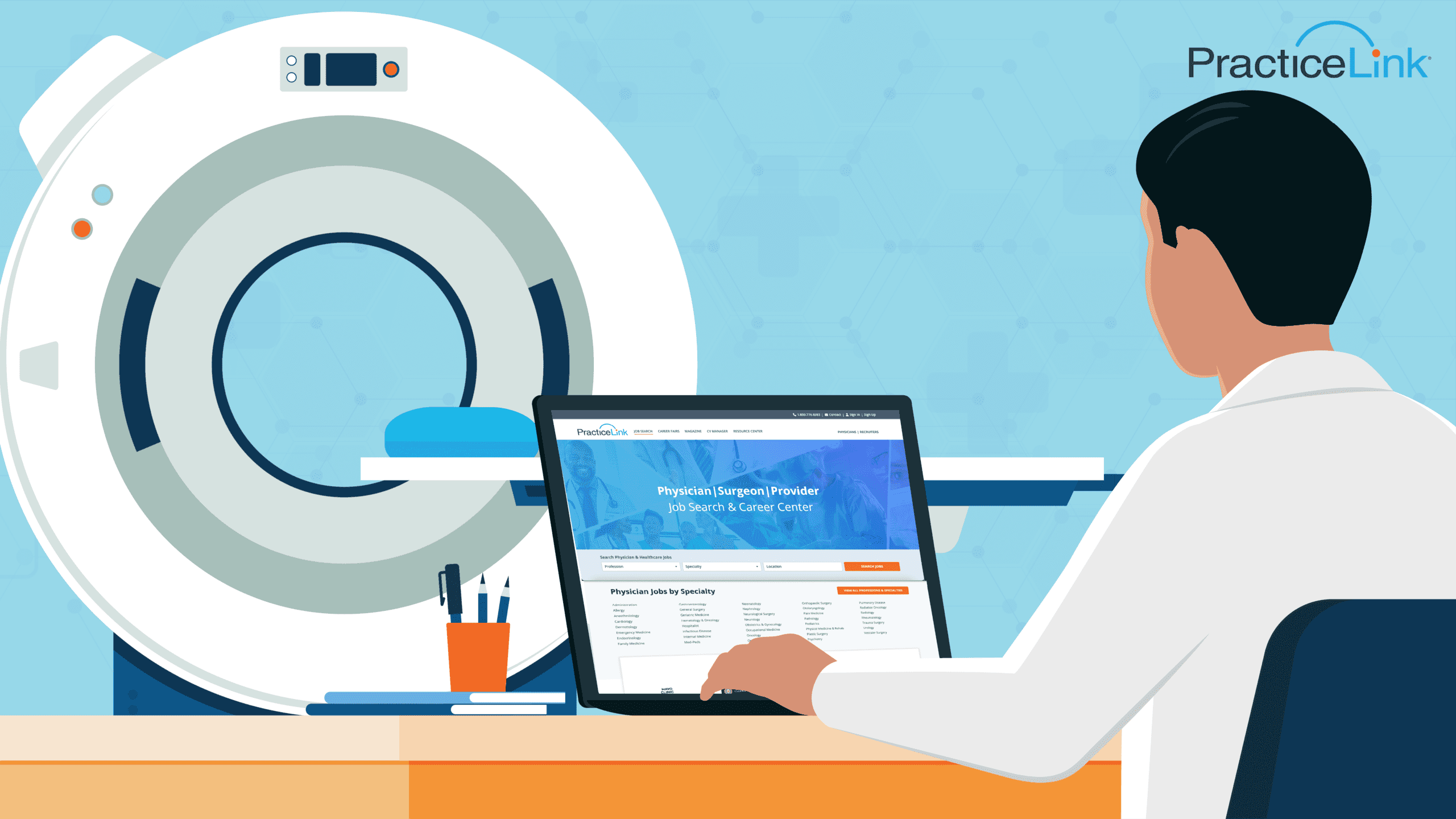
Radiologist job search tools and assets
A successful radiologist job search often boils down to using the right radiologist job search tools and assets at the right time. Between demanding schedules, call responsibilities and clinical priorities, most radiologists have little time to dedicate to job searching.
Yet decisions you make during this process—how you present your experience, which opportunities you see and how prepared you are for conversations—directly affect the quality of roles available to you. Whether you’re actively looking or quietly exploring options, the right preparation creates leverage—and saves time.
Why the right job search tools matter for radiologists
Not all job searches are created equal. For physicians—and especially radiologists—the tools you use often determine not just if you get interviews, but which opportunities come your way.
“Preparation doesn’t just save time—it helps you avoid the wrong opportunities.”
Common mistakes in physician job searches
Even experienced physicians can run into avoidable issues during a job search, including:
- Relying on outdated or generic CV formats
- Waiting too long to prepare application materials
- Applying broadly without filtering by subspecialty or schedule
- Underestimating the importance of interview preparation
- Using general job boards not built for physicians
These missteps don’t reflect a lack of experience; they’re usually a result of limited time and unclear expectations.
How preparation affects opportunity quality
Well-prepared candidates tend to see better opportunities earlier. A strong CV, clear preferences and visible profile help recruiters and employers quickly understand where you fit—and where you don’t.
That clarity leads to:
- More relevant outreach
- Fewer mismatched interviews
- Stronger negotiating positions
Why generic job tools don’t always work for radiologists
Radiology roles vary widely by modality, subspecialty, workload and setting. General job platforms often lack the filters, terminology and recruiter access needed to surface the right roles.
Physician-specific platforms like PracticeLink, built around radiology jobs, are designed to support how radiologists actually search—and how employers actually hire.
Essential radiologist job search tools
A successful search usually involves a small, focused set of assets rather than dozens of disconnected tools. The most effective job searches are built around four core categories:
CV and application documents
Your CV and supporting materials create your first impression and shape how employers assess fit. Having these prepared and current means you can respond to opportunities within hours rather than days—a critical advantage when desirable positions attract multiple qualified candidates.
Interview preparation resources
Understanding interview formats and expectations reduces stress and improves decision making. When you know what to expect—whether it’s a panel discussion, facility tour or informal dinner with potential colleagues—you can prepare appropriately and focus on evaluating fit rather than managing anxiety.
Job alerts and search filters
Automated alerts help you stay informed without constant searching. The key is configuring alerts that balance specificity with flexibility—narrow enough to filter out irrelevant positions, broad enough to surface opportunities you might not have considered.
Recruiter and platform support
The right support simplifies logistics and expands access to off-market opportunities. Physician-focused platforms and recruiters can streamline the application process by managing communications with multiple institutions simultaneously, scheduling interviews around clinical obligations and organizing site visits efficiently. They often have insider knowledge about institutional culture, call burden and growth potential that isn’t available in job descriptions.
Radiologist CV and application assets
Your CV is one of the highest-impact tools in your job search. Before you ever meet the hiring team, your CV is already making the case for you—or against you.
Other application assets might include:
- Cover letter or letter of interest
- Reference list (often three to five professional references with contact information)
- Letters of recommendation (sometimes requested up front, sometimes later)
- Personal statement or brief professional narrative (more common in academic or subspecialty roles)
- Case or procedure log documenting volume, mix and complexity of studies/procedures
- Portfolio of key accomplishments (programs built, quality projects, leadership roles, teaching, research)
Radiologist CV vs resume: what employers expect
For radiology roles, employers almost always expect a CV, not a resume.
A radiologist CV typically includes:
- Education and training (medical school, residency, fellowship)
- Board certification and licensure
- Subspecialty expertise and modalities
- Work history with clinical scope and volume
- Research, teaching and leadership experience
Unlike resumes, CVs are comprehensive and medically focused. Using a physician-specific format—such as a radiologist CV template—helps ensure nothing critical is overlooked.
Key elements of a strong radiologist CV
High-performing CVs tend to share a few core characteristics:
- Clear subspecialty identification
- Concise descriptions of clinical responsibilities
- Accurate credentialing information
- Clean formatting that’s easy to scan
A brief, tailored cover letter can also provide helpful context. Reviewing radiology cover letter examplescan clarify how to introduce your experience without repeating your CV.
Common CV mistakes to avoid
Radiologists often lose momentum due to small but fixable issues, such as:
- Overly long narrative descriptions
- Missing certification or licensure details
- Inconsistent formatting
- Lack of clarity around modality mix or call expectations
Using a checklist or downloadable template helps eliminate these errors and speeds up the application process.
Interview preparation tools for radiologists
Even highly experienced physicians benefit from structured interview preparation. Mock interviews with colleagues or mentors can help radiologists articulate clinical expertise, research contributions and vision for departmental growth. Online platforms now offer specialty-specific question banks that address common radiology scenarios, from navigating AI integration discussions to explaining subspecialty interests.
Common radiology interview formats
Radiology interviews may include:
- Virtual screening interviews
- On-site or hybrid interviews
- Panel discussions with physicians and administrators
- Informal conversations with department members
Understanding the format ahead of time allows you to prepare appropriately and manage expectations.
Questions radiologists should expect
While every interview is different, many employers ask about:
- Clinical workflow and case mix experience
- Subspecialty coverage and flexibility
- Comfort with call, weekends or teleradiology
- Communication and collaboration style
Reviewing common radiology interview questions can help you prepare concise, confident responses.
Questions radiologists should ask employers
Interviews are also your opportunity to gather information. Thoughtful questions about workload, support staff, growth opportunities and long-term stability can reveal whether a role aligns with your goals.
Why job alerts matter in competitive markets
Job alerts notify you when new positions match your criteria—often before they’re widely advertised. This is especially valuable in competitive markets or for subspecialized roles.
Filtering by subspecialty, location and schedule
Effective filters allow you to narrow opportunities by:
- Subspecialty and modality
- Geographic preference
- Practice setting
- Schedule and call structure
Platforms featuring targeted radiology job openings and curated radiologist career opportunities help ensure you’re seeing relevant roles—not noise.
Staying passive while remaining visible
Even without applying, a completed profile and active alerts keep you visible to recruiters while preserving control over your timeline.
Working with recruiters as a job search asset
Recruiters are often underutilized—or misunderstood—by physicians. Many radiologists avoid recruiters entirely, assuming they’ll be pressured into considering unsuitable positions or that recruiters only care about closing deals. While some recruiters do operate this way, experienced physician recruiters who specialize in radiology placements function more as career advisors than salespeople. They provide market intelligence you can’t easily find elsewhere, access to positions filled quietly through professional networks and negotiation support that often results in better compensation packages.
When to involve a recruiter
Recruiters can be especially helpful when:
- You’re relocating
- Exploring nontraditional schedules
- Seeking confidential opportunities
- Navigating contract questions
What information recruiters need from radiologists
The more clearly you define your preferences, the better recruiters can advocate for you. This includes subspecialty focus, location flexibility and career priorities.
How recruiters can streamline the process
Experienced physician recruiters help coordinate interviews, clarify expectations and reduce administrative burden, allowing you to focus on decision making rather than logistics.
Digital profiles and visibility tools
Many radiologists explore opportunities quietly before deciding to apply. The best career moves often happen when exceptional opportunities find you rather than the other way around. A complete, current profile on physician career platforms positions you to be discovered by practices seeking someone with your exact qualifications—your subspecialty training, your experience level, your geographic preferences.
Optimizing your physician profile
A complete, up-to-date profile improves how you’re matched with opportunities and recruiters. Even small updates—like clarified subspecialty interests—can make a difference.
Managing confidentiality
Physician-focused platforms like PracticeLink prioritize confidentiality, allowing you to control who sees your information and when.
Staying visible without actively applying
Visibility tools enable passive discovery while maintaining discretion—ideal for physicians who want options without pressure.
How PracticeLink supports the radiologist job search
PracticeLink is designed specifically for medical providers, with tools that support efficiency, clarity and confidence. PracticeLink’s system understands unique aspects of physician career transitions—lengthy CVs documenting academic achievements, complex compensation structures, subspecialty nuances and the critical importance of practice culture and call schedules.
Centralized job search and alerts
Search, filter and track opportunities in one place—without juggling multiple platforms.
Radiology-specific opportunities
Access roles curated for radiologists, across subspecialties and practice settings.
Tools designed for physicians, not general applicants
From CV uploads to recruiter connections, PracticeLink’s tools reflect how physician hiring actually works.
Next steps:
- Upload your CV
- Create a job alert
- Browse radiology jobs
Frequently asked questions about radiologist job search tools
What tools do radiologists need to find a job?
Radiologists benefit most from a strong CV, interview preparation resources, job alerts and access to physician-specific job platforms and recruiters.
Is a CV or resume better for radiology jobs?
A CV is almost always preferred for radiology positions, as it provides comprehensive medical training and experience details.
How early should I prepare job search materials?
Ideally, materials should be prepared several months before you plan to move, allowing time for updates and exploration.
Are job alerts effective for physicians?
Yes. Job alerts help physicians discover relevant opportunities early without constant searching.
Should radiologists work with recruiters?
Yes. Recruiters can be valuable partners, particularly for confidential searches, relocations or complex negotiations.
How can I stay confidential during a job search?
Using physician-focused platforms with visibility controls allows you to explore opportunities discreetly.
A radiologist job search should be as exciting as the opportunity they’re hoping for. With the right tools in place—clear documents, smart alerts, thoughtful preparation and trusted support—you can move through the process with confidence and control. Whether you’re actively pursuing a change or simply staying aware of what’s available, preparation puts you in a position to recognize the right opportunity when it appears.
If you’re ready to explore what’s next, PracticeLink brings everything together in one physician-focused platform. Upload your CV, create personalized job alerts and browse radiology-specific opportunities designed around how physicians truly work and make decisions. PracticeLink helps you stay informed, visible and in control. When the right role comes along, you’re ready to take the next step with clarity and confidence.