
How to prepare for a physician job interview
By Georgia Scott February 19, 2026
 Share
Share- Export to PDF
 Listen
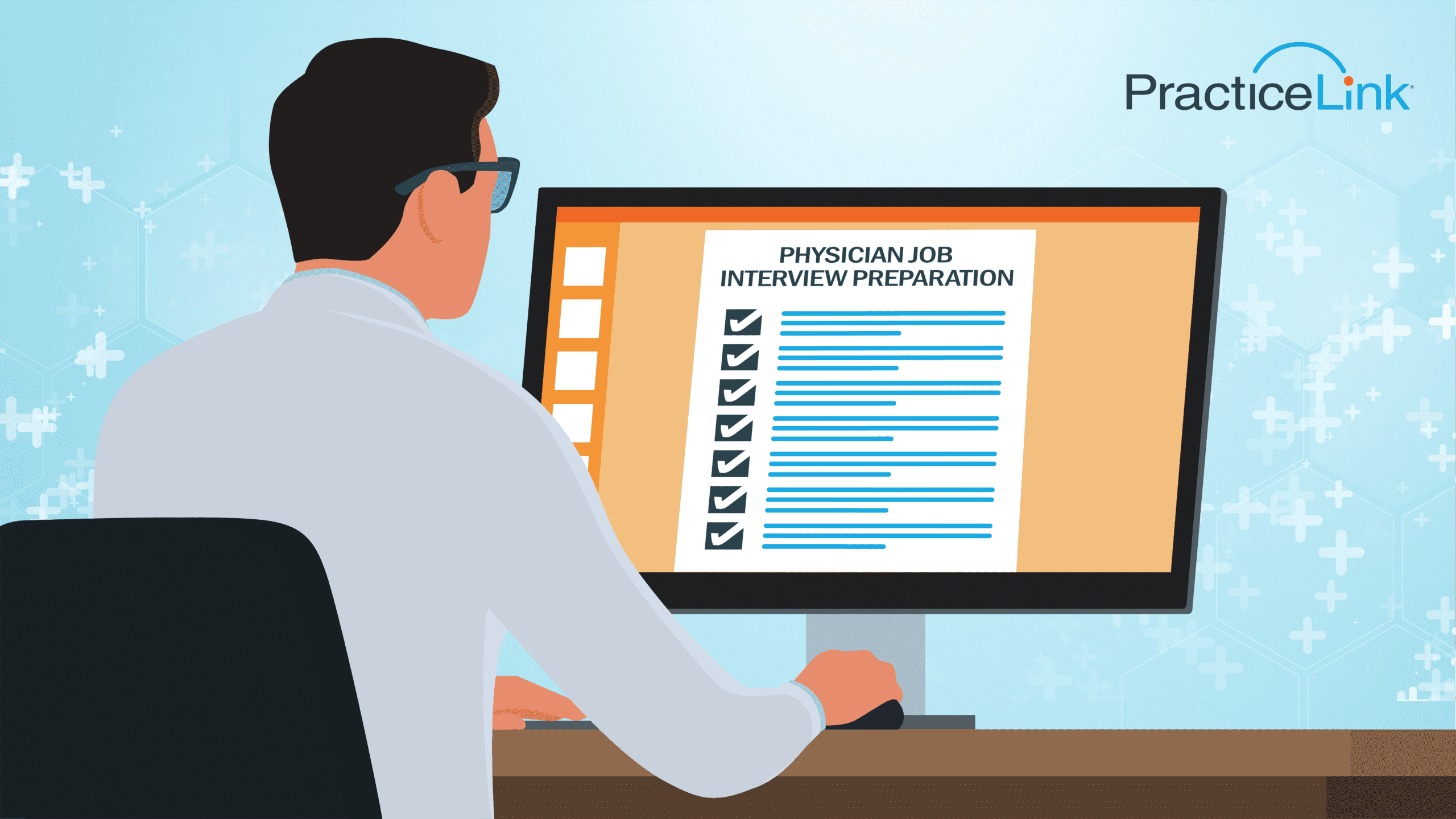
How to prepare for a physician job interview
Physician interview preparation is about far more than rehearsing answers to common questions. It’s about ensuring the next step in your career aligns with your professional goals, personal priorities and long-term well-being. So, the question remains, how to prepare for a physician job interview?
We understand how overwhelming the physician interview process can feel. After years of training, the stakes are high—your compensation, schedule, practice culture and family life may all hinge on a few critical conversations.
Before your interviews, you’ll want to prepare thoroughly, ask the right questions and position yourself for long-term success.
Why physician interview preparation matters
A physician interview is not simply about whether you can do the job—it’s about whether the job is right for you.
Physician hiring experts advise providers, “Act like this is the only interview that matters,” noting that interviewers “are not likely to hire someone they believe is not enthused about their practice.”
A national survey found physicians average more than four interviews before securing a position, underscoring how competitive—and consequential—each interview can be. Decisions made during this process influence burnout risk, retention and career satisfaction.
Physician burnout remains a significant concern, with organizations such as the AMA and Medscape reporting ongoing challenges related to workload, administrative burden and work-life balance. Thoughtful interview preparation helps you identify red flags early and avoid roles that may contribute to long-term dissatisfaction.
Step 1: Clarify your career priorities before the interview
Before you begin researching an employer or rehearsing answers, start with yourself.
Ask:
- What does an ideal work-life balance look like for me?
- How important are schedule flexibility, call responsibilities and autonomy?
- What compensation structure supports my financial and lifestyle goals?
- Do I prefer academic, employed or private practice settings?
Physician compensation varies widely by specialty, geography and practice model. Understanding average compensation benchmarks helps you enter interviews with realistic expectations and confidence when discussing offers later in the process.
You deserve a position where you can thrive both professionally and personally. Clarity upfront ensures you evaluate opportunities through the right lens.
Step 2: Research the practice and community thoroughly
One of the most important physician interview tips is to treat preparation like a clinical workup—thorough, methodical and evidence-based.
Research:
- Practice size, ownership and governance structure
- Patient demographics and case mix
- EMR systems and clinical workflows
- Recent growth, mergers or leadership changes
- Community factors such as schools, housing and cost of living
Understanding the employer’s recruitment challenges can also provide valuable context. According to MGMA and AAPPR data, common challenges include physician shortages, competition from neighboring systems and retention concerns. Your preparation allows you to position yourself as a long-term solution—not just a hire.
For a deeper dive, reference our physician interview preparation checklist here.
Step 3: Prepare for common and specialty-specific questions
Knowing how to prepare for a physician interview means anticipating what interviewers are truly trying to assess.
Expect questions about:
- Clinical decision-making and patient care philosophy
- Team collaboration and communication
- Handling high patient volume or complex cases
- Interest in the specific practice or location
- Long-term career goals
Equally important is understanding how your answers reflect cultural fit. To refine your responses, review common practice physician interview questions and prepare examples that demonstrate both competence and adaptability.
Step 4: Develop insightful questions of your own
Asking thoughtful questions is one of the most overlooked aspects of physician interview preparation, yet it is one of the most impactful.
“Being prepared not only helps candidates present themselves in the best light, but allows them to clearly understand the role, team dynamics and organizational expectations.” Hospital Recruiting
Focus on:
- Call schedules and coverage expectations
- Administrative support and staffing ratios
- Metrics for success and performance evaluation
- Physician turnover and retention history
- Leadership accessibility and decision-making processes
A well-structured physician interview checklist ensures you don’t miss critical topics during the interview process, especially across multiple conversations.
Step 5: Understand compensation, benefits and incentives
Compensation discussions are a natural part of physician interviews and should be approached with preparation—not discomfort.
In addition to base salary, explore:
- Productivity models (RVU-based, salary plus bonus, etc.)
- Sign-on bonuses and relocation assistance
- Loan repayment options
- CME allowances and protected time
- Vacation, parental leave and benefits structure
Travel and relocation bonuses have become increasingly common, particularly in hard-to-fill specialties and underserved regions. Understanding these trends allows you to evaluate the full value of an offer beyond headline salary numbers.
PracticeLink resources can help you compare offers in context and align them with your broader career strategy.
Step 6: Prepare for virtual and on-site interviews
Today’s physician interview process often includes both virtual and on-site components. Each requires a slightly different preparation approach.
- Test technology and internet connection in advance
- Choose a quiet, professional environment
- Maintain eye contact and clear communication
- Have notes available, but avoid reading directly
On-site interviews:
- Observe team dynamics and workflow
- Assess facilities, equipment and support staff
- Evaluate how physicians interact with leadership
- Explore the surrounding community
Step 7: Follow up and reflect after each interview
After the interview, send a concise thank you note reaffirming your interest and highlighting alignment with the practice’s mission or needs.
Then, reflect:
- Did the practice align with your priorities?
- Were expectations clearly communicated?
- Did you feel respected and supported?
- Could you envision yourself there long-term?
Documenting impressions immediately helps when comparing multiple opportunities—a common scenario given most physicians attend several interviews before accepting a role.
How PracticeLink supports your interview journey
PracticeLink acts as your guide throughout the physician job search, offering tools, insights and opportunities designed to reduce uncertainty and increase confidence.
We help you:
- Identify roles aligned with your goals
- Prepare strategically for interviews
- Understand market trends and compensation benchmarks
- Avoid common pitfalls that lead to burnout or early turnover
Turning preparation into confidence
Physician interview preparation is not about perfection—it’s about clarity. When you understand what you want, research opportunities thoroughly and ask the right questions, interviews become empowering rather than stressful.
You’ve invested years in becoming an exceptional physician. With the right preparation and guidance, your interview can be the bridge to a role where you feel valued, supported and fulfilled.
PracticeLink is here to guide you every step of the way—helping you turn preparation into confidence and confidence into the right career decision.