
How to follow up after a physician interview
By Georgia Scott February 19, 2026
 Share
Share- Export to PDF
 Listen
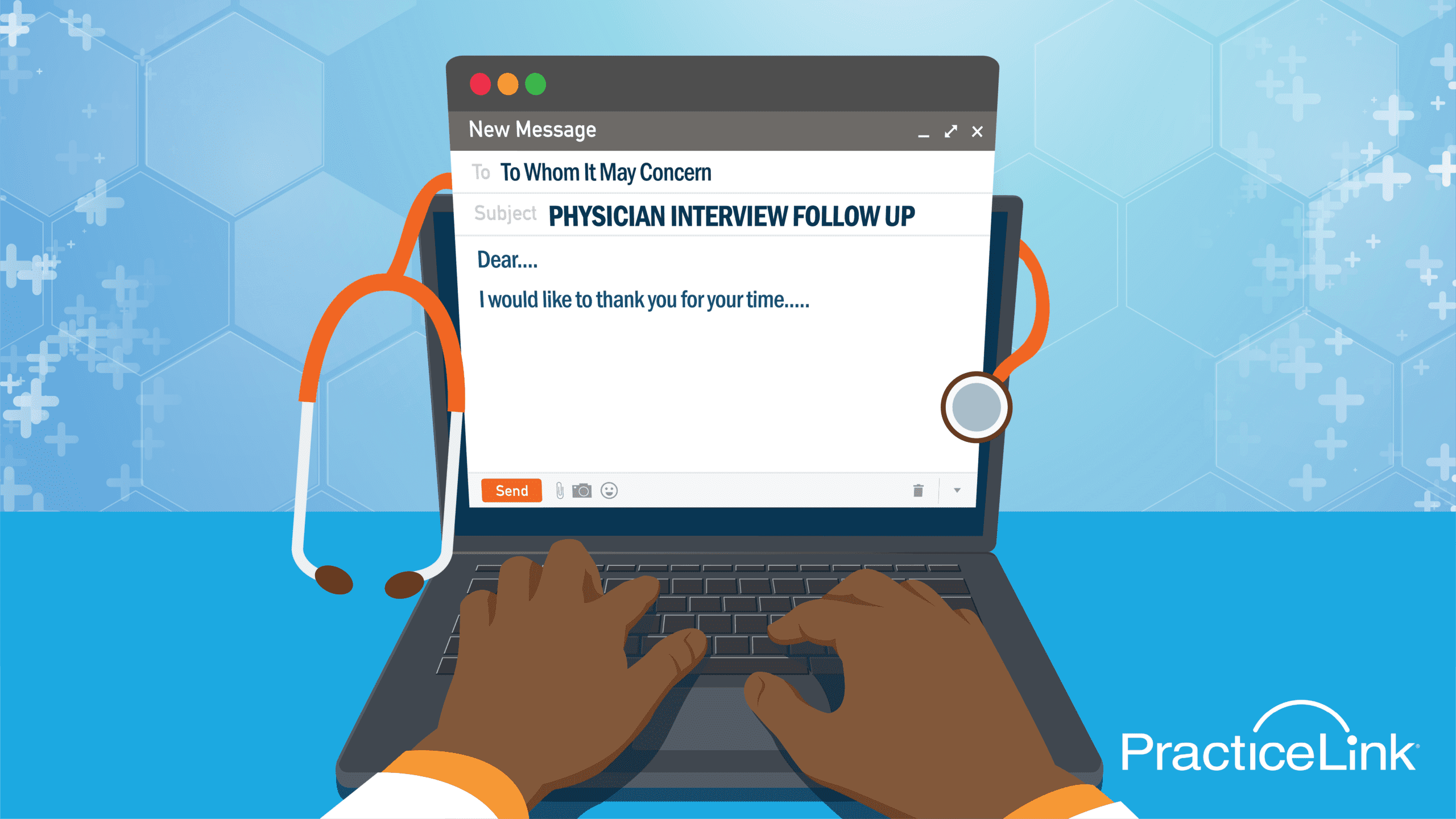
How to follow up after a physician interview
Following up after a physician interview is one of the most overlooked—but most powerful—steps in the job search process. You’ve invested years into your training, navigated a competitive interview and evaluated a potential next chapter for your career and family. What happens after the interview can significantly influence whether an offer moves forward—and how confident you feel about accepting it. The question remains: How to follow up after a physician interview?
We understand how overwhelming the physician interview process can feel. High stakes, long timelines and limited feedback can create unnecessary stress.
Why following up after a physician interview matters
A physician interview isn’t just about clinical expertise; it’s a mutual evaluation of culture fit, long-term goals and lifestyle alignment.
Following up after a physician interview reinforces your professionalism, demonstrates genuine interest and helps keep communication moving in a process that often involves multiple decision-makers.
Industry data suggests physicians average more than four interviews before securing a final offer. In such a competitive environment, thoughtful follow up can help you stand out without appearing pushy.
Step-by-step: How to follow up after a physician interview
1. Send a timely thank you message
Within 24–48 hours, send a personalized thank you email to each interviewer. This is your first—and most important—follow-up step.
What to include:
- Gratitude for their time
- One or two specific discussion points from the interview
- Reaffirmation of your interest in the role
This small gesture reinforces attention to detail and interpersonal skills—qualities recruiters consistently cite as critical hiring factors.
2. Reiterate your fit for the role
Physicians often underestimate how much clarity helps hiring teams advocate internally. Experts describe interviews and on-site visits as a way to confirm “cultural alignment and personality fit” once clinical competence is established.
Use your follow up to connect your background directly to the practice’s needs:
- Patient population
- Call structure
- Team dynamics
- Growth opportunities
This positions you as thoughtful, intentional and prepared for long-term success.
3. Ask smart, strategic questions
If appropriate, your follow-up email can include one or two clarifying questions. This shows engagement—not hesitation.
“Beyond the answers themselves, the manner in which your questions are received and answered can also give you an excellent feel for the culture of the organization.” — Landing the best physician practice for you – PracticeLink Magazine
Strong follow-up questions may include:
- Next steps and anticipated timeline
- Contract review process
- Opportunities for mentorship or leadership
- Support for relocation or onboarding
Timing your follow-up
After on-site or virtual interviews
If you haven’t heard back within 7–10 business days, a polite check in is appropriate. Physician recruitment timelines are often longer due to:
- Committee scheduling
- Credentialing reviews
- Compensation benchmarking
Average physician compensation varies widely by specialty, and organizations often take time to align offers with market data, especially when relocation bonuses, sign-on incentives or loan repayment are involved.
If you receive another physician offer
Pinnacle Health Group notes that residents “will seriously explore, on average, 6–10 job opportunities,” while experienced physicians typically explore about 3–4 opportunities before choosing a position. With instances like this, transparency matters. Let recruiters know—professionally and respectfully—you’re considering another opportunity while remaining interested.
This can:
- Accelerate decision making
- Clarify your priority status
- Open conversations about compensation or flexibility
What not to do after a physician interview
Avoid common missteps that can unintentionally hurt your candidacy.
- Over-communicating or sending daily follow ups
- Using generic, copy-paste messages
- Negotiating compensation too early
- Expressing frustration with delays
Physician recruitment challenges—such as staffing shortages and administrative bottlenecks—are well documented by MGMA and AAPPR. Patience paired with professionalism goes a long way.
Using follow up to evaluate your fit
Following up isn’t just about impressing the employer; it’s about protecting your future.
Burnout rates among physicians remain high, with AMA and Medscape reporting ongoing concerns around workload, autonomy and work-life balance. Your follow-up interactions can reveal:
- Responsiveness of leadership
- Organizational transparency
- Respect for physician time
You deserve a position where you can thrive both professionally and personally.
Leveraging recruiter relationships
Recruiters can be powerful allies in the follow-up process. Their role is to bridge communication, manage expectations and advocate for alignment on both sides.
Our recruiter insights come directly from those who hire physicians every day.
A recruiter can help you:
- Gauge employer interest
- Understand compensation benchmarks
- Navigate multiple offers
- Clarify next steps without overstepping
Internal resources to strengthen your strategy
For more detailed guidance, explore our physician interview follow-up tips guide, designed to help you approach every stage of the interview process with confidence.
When to move on—and when to wait
Not every interview will lead to an offer, and that’s okay. Use each experience to refine your approach.
Signs it may be time to move on:
- Repeated lack of communication
- Vague or inconsistent answers
- Misalignment with your priorities
Signs patience may pay off:
- Clear communication about delays
- Positive recruiter feedback
- Ongoing engagement from leadership
Final Thoughts: Confidence through clarity
Following up after a physician interview isn’t about pressure; it’s about clarity, professionalism and self-advocacy. When done thoughtfully, it strengthens relationships, reduces uncertainty and helps you make informed career decisions.
PracticeLink is here to guide you every step of the way, so you can focus on what matters most: finding a role where your skills are valued and your life outside of medicine is respected.
Take the next step
With the right tools and guidance, you can move forward with confidence—and turn every interview into an opportunity for long-term success. Visit PracticeLink.com to explore more resources, create your free profile and search physician jobs.